… to create a life worth living and a legacy worth leaving
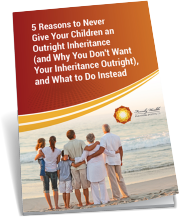
Discover the 5 Reasons to Never Give Your Children an Outright Inheritance (and WhyYou Don't Want Your Inheritance Outright), and What to Do Instead
What is Family Wealth?
Historically, Family Wealth referred to money and assets that were to be passed on from one generation to the next.
It’s far more than just money.
As an inheritor of Family Wealth, maybe you have had feelings of shame, guilt, or uncertainty regarding how to incorporate the money created by your family into your life.
With a true understanding of your real inheritance, you can be freed from that and put your Family Wealth to work for you, now.
Or, perhaps as a creator of Family Wealth, you have been concerned about how to pass on what you’ve created with the assurance that it will be used for good, and not squandered or contribute to a life of entitlement for your children.
With a true understanding of the meaning of Family Wealth and why you created it, you can enjoy what you created at a much greater level.
Or maybe you don’t understand the nature of your Family Wealth at all, even thinking you don’t have any, because you grew up without money. And, it’s just not true.
Family Wealth is far greater than the money you had (or didn’t have) growing up.
The conversation about Family Wealth happening here is designed to help us all understand the true nature of our collective resources in a way that is healthy and whole, and also much different than what we have learned.
This is about the true wealth we all hold and a new understanding of family and inheritance. It’s about how we create wealth while we are alive, how we integrate it into our relationships so that it isn’t a source of shame, guilt, or entitlement, and how to pass it on before we die, so we can enjoy our creations fully.
When understood, Family Wealth becomes a highly valuable resource intentionally well-used, available to us all, to create the world we want to live into, together.
“Wealth isn’t how much money you have. Wealth is what you’re left with if you lose all your money.”
Hearing this quote for the first time changed a lot for me. How would the choices of your life and legacy change, if you thought of wealth this way?
Growing up, I found money to be very confusing. Most people suffer from what I’ve come to understand and have named as “money dysmorphia”, the distorted view of our finances that causes us to make poor decisions about how we use our time, energy and attention.
Time, energy and attention are non-renewable resources, whereas money, if you know how it works, is infinitely renewable. Yet, we often trade our time, energy, and attention for more money. Why?
The answer to this question for each of us is an eye-opener and could be the exact thing you need to change your everything.
Watch Ali Katz (formerly Alexis Neely) on Good Morning America, the Today Show and Fox News discussing Family Wealth.
As Seen On
Find a Personal Family Lawyer
Are you or anyone you know -
Having a Baby
Purchasing a Home
Getting Married
Facing Surgery
Getting Divorced
Raising Children
Moving in Together
Starting a New Job
Caring for and Elderly Parent
Arguing With a Neighbor
Dealing With the Death of a Loved One
Starting a Business
Buying Life Insurance
If so, you need to talk to a Personal Family Lawyer® so you know you are making the very best choices for your life and loved ones.
Each of these events is fraught with legal challenges that can be navigated with the best possible outcome for you and your family IF you have the right information.
Without the right information, your family is at risk from what you don’t know. And, in the legal sense…what you don’t know CAN and WILL hurt you.
“Each human cell in our body has 2 intertwined strands of DNA. One from our mom & one from our dad. The extent to which we feel complete and resolved around love from and for our parents, influences the level to which our cells feel whole & right. No amount of personal growth, altered states, transformation or meditation can make the cells in your very being feel integrated, if we cannot access the love to & from our parents. Our connection to our parents is the original portal to life itself. It’s how we link into the great chain of being. If we can find what’s sacred in the connection with our makers, we’re more in touch with our divinity.”
The most important work I do is in guiding you to remember who you are, why you came here in this lifetime and the work you are here to do.
When you understand why you were born into the family you were, the legacy you were given, and how to work with it, no matter what it is, you begin to have a clarity that is unparalleled.
I believe this work is the most important work for you to do.
By doing it, you discover the true Family Wealth that’s been right here for you all along.
Before the work you do for money. Before the work you do for your personal purpose. Before the work you do on your romantic relationship. There is the work to do with your family of origin. Get clarity here, and everything else makes sense and becomes far easier.
I call this work the work of discovering your true Family Wealth, and it’s all about understanding where you came from, who you really are, why you are here, and remembering what is yours to do.
If you would like to explore the possibility of discovering your real inheritance, so you can create a life worth living and a legacy worth leaving, send me a message here: